
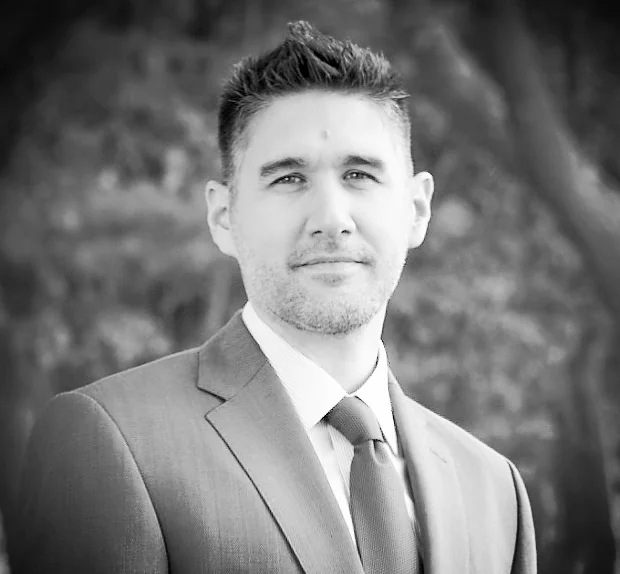
Sources and Methods #10: Jason Lyall


Jason Lyall 101:

Personal Website (you can find links to all his research here)

Yale Professor Page

MISTI USAID Page

Jackson Institute at Yale

Institution Social and Policy Studies

Show Notes:

3:58 - I’m interested in the effectiveness of violence - when it works, whether it works - and what it does to the victims. And I’m interested in insurgents and how they react to violence, and how does it affect them? Do they ramp up their attacks, or scale down their attacks?

4:40 - Counter insurgency is not a new practice. But it’s often been approached in a fairly crude fashion. What we’re trying to do is bring some new literature to the table from spatial economics literature or survey literature and better understand it.

9:00 - Study looking at artillery fire that the Russians were lobbing more or less randomly into populated settlements. They were doing this as a way of trying to separate the people from the insurgency, showing people what the consequences of continued support for the insurgency would be. Most of our theoretical literature would say that indiscriminate violence is incredibly counter productive and would not be be effective - would generate new insurgents and new grievances - so you should see this uptick in violence. What’s interesting in the Russian case is that you don’t see that uptick. It actually seems to have decreased insurgent violence in the periods after the shelling. So it’s an outlier case... And I would say it is what has led to the dismantling of the insurgency in Chechnya.

12:12 - I think the way I would read that paper - we should not assume that violence has any one kind of effect. We should be looking for the different effects, and looking for the conditions of those effects.

14:30 - The metrics used in this research is really good for short term effects, but entirely different methods may be necessary to take the long term view and understand those effects. The field lab I run is trying to merge those two perspectives.

17:58 - We’re not good at trends, we’re not good at regional patterns, we’re not even good at generalizability inside the same case we’re studying - and these are problems.

22:00 - It is possible to get the data in difficult areas, but you have to be really really smart and careful. You can do it, but it takes a tremendous amount of time. And the risk of failure is incredibly high. In Afghanistan, I’ll typically have two or three projects going at the same time with the understanding that one of them will likely fail.

23:04 - If you adopt the right methodology, you can get more data than we ever thought possible.

26:22 - I have a love/hate relationship with the Asia Foundation. I know what they’re trying to do, but I have questions about how they’re doing it.

27:32 - The latest Asia Foundation Report here.

27:49 - Surveys for me are about mapping patterns down, rather than getting really deep insights into what a particular concept means.

29:00 - For local level questions or regional questions - I think these are a nice middle ground, using a mid-range methodology, where I can do lots of things but not everything - is the way to go.

29:35 - Smart polling should be a key part of our toolkit, but the thing that we usually lack is baseline data. By the time we start caring about a place, it’s too late to run baselines. So we’re forever behind, because we never know what was there before. So I’m a big proponent of using smart, tailored surveys. Specific questions. Specific areas.

30:54 - With that, these surveys just measure attitudes, not behavior. Important to remember that.

33:01 - In Afghanistan, I think we vastly underuse SMS as a tool.

36:40 - Explaining Support for Combatants during Wartime: A Survey Experiment in Afghanistan (co-authored by Lyall and includes the Endorsement polling technique). A primer on  the list technique in polling.

45:55 - Bombing to Lose? Airpower and the Dynamics of Violence in Counterinsurgency Wars, published in August 2014 by Lyall, found:

Evidence consistently indicates that airstrikes markedly increase insurgent attacks relative to non-bombed locations for at least 90 days after a strike.

We’d be hard pressed to find an example where an insurgency could be destroyed from an air - where air power alone has actually done this.

55:56 - I build project-specific infrastructure when I get to work. Sometimes I’m working with satellite imagery. Each project has it’s own methodology, research. A problem I’m having right now is that there’s too many platforms in play - we’re working to get everyone on the same

1:00:40 - Morning Routine:

  • I knock off around 2 or 3AM. The last thing I do is write a note to myself about what I should be focusing on the next day. If I don’t get centered quickly, I find that I lose the day, getting distracted by email, etc.

  • So that note shows me - which I keep with me - what I need to do, what I have to get through that day, it’s like my touchstone.

  • I set aside an hour or two every Friday about what I want to accomplish the following week, and these notes each morning help preserve my space to think.

  • It’s often a physical sticky - it tells me what I’m doing, and where I am in the master plan. Otherwise I write these things in Evernote.

1:04:22 - Also use:

  • RunKeeper, to remind myself to keep working out.

  • I’m a big fan of turning off my social media, letting it go dark. I use a software blocker often for up to a week at a time to keep me off of it.

Jason’s Book: The Peripheral by William Gibson. And The Book of Strange New Things by Michel Faber.  

Jason’s Film: Guardians of The Galaxy

Jason’s Song: Alt-J’s Taro
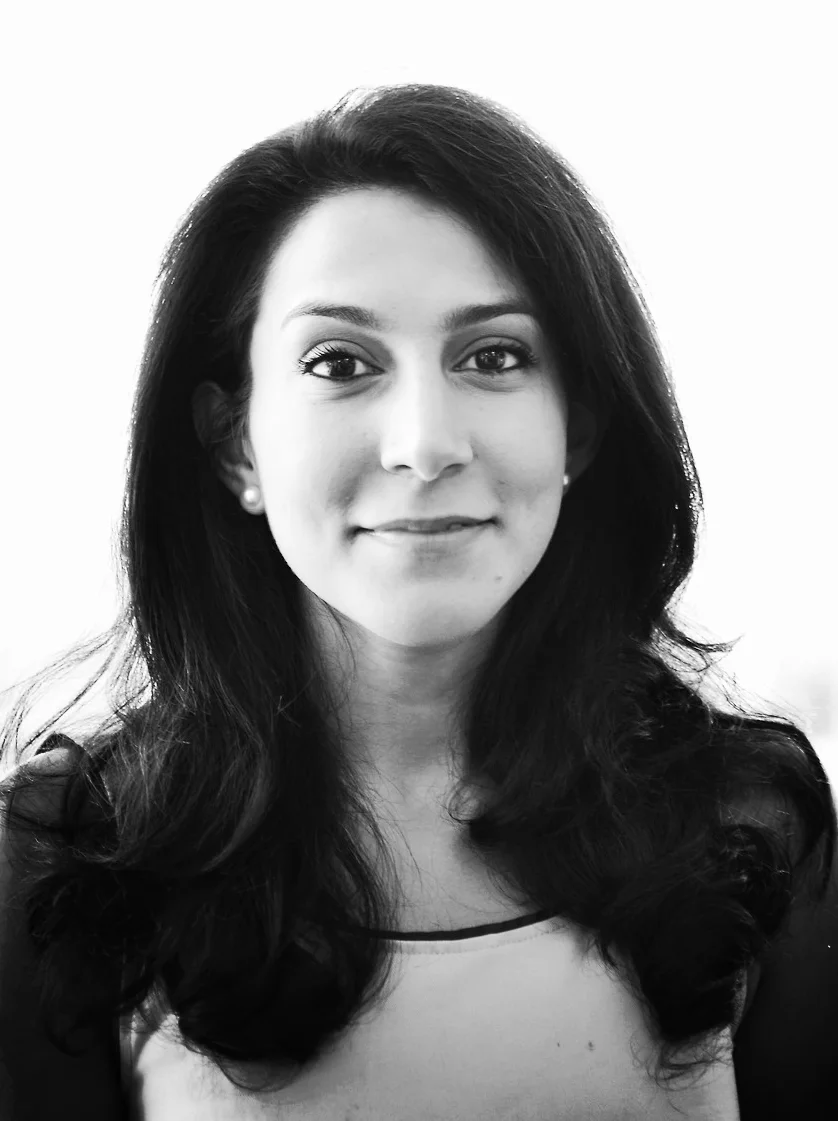
Sources and Methods #8: Azmat Khan


Photo credit: Sam Bailey


Azmat Khan 101:

Twitter / Facebook / Instagram / Google +

-- Tumblr/Blog

-- "The Brothers" (PBS Frontline in Cairo)

-- "The Bombing of al-Bara" (PBS Frontline):

Azmat @ Al-Jazeera America

Azmat @ PBS Frontline

Show Notes:

5:58 - Defining ‘success’ in the digital media age:

It depends on the institution. Some friends of mine have been given quotas to hit. I’ve been lucky not to have to do that. I value response and resonance as an indicator - people writing about it, talking about it online, questions, even critiques, things like that I really value in terms of success. The ideal success of course is when there’s a problem or injustice is to see that result in a conversation that hopefully elicits change.

7:50 - Al Bara Film

10:20 - Is Google News driving all of our news consumption?

Not necessarily - I’d say it’s more social. Facebook in particular, not as much Twitter, is one of the biggest sources of traffic, and it’s not a bad thing for a good thing to be shared a lot. And for people to study data to figure out ways to make it reach as many people as possible. In that way, it can be a very good thing. And there’s the opposite of that - when stories are told in a way just to elicit pageviews of clicks.

11:36 - A follow up point on success in journalism:

That it endures, and can be a reference point for something later… that can be a definitive portrait of something at a particular time.

16:00 - Staying up on social media:

I dip in an out of that depending on how busy I am with other things… But I spent a lot of time in the past curating lists of people to follow on Twitter. This can include newsletters. I use Digg’s website news.me and wakeup with a morning email. I use Reddit Edit.

At the same time, I think there are lots of non-traditional ways I gather information from areas that are less talked about.

Facebook Groups. If there’s an issue that sparks my interest or I want to learn more about or report on, one of the first things I’ll do is see if anyone has coalesced around that issue in a Facebook Group. It’s more useful than Message Boards, so you can message them directly, and it’s super easy to get in touch immediately and quickly. And people get intimate on a place like Facebook. That’s one of the most under-reported tools to use when trying to figure something out. It’s not representative of an issue, but it is individuals, and you can learn so much. It’s an incredible starting place that people don’t think about when they want story ideas.

20:58 - for the kinds of stories I’m doing now, I rely more on individuals than people talking about public issues on Twitter.

24:00 - Right now, one of the most fascinating things you can see online are people who’ve supposedly run off to join ISIS. They have blogs, and social media accounts. They are so interesting. But verification is very hard when it comes to these things. The best reporters have done a good job corroborating the facts… but I do wonder, what does this platform or accessibility do in terms of small errors or embellishment of the truth.

26:00 - Norwegian filmmaker and a fake short on Syria

28:02 - Fake blog taken for real news here. Proof here.

32:33 - I think books are increasingly underutilized. The people who turn to information that isn’t publicly accessible when they’re writing about whatever issue it is online.

33:48 - Brainpickings.org. It’s great because much of the material is not publicly accessible, the information is not at fingertips. There should be more of that, we may be losing a lot of that.

34:31 - I think the internet echo chamber is one of the dangers of how we receive our information. You would think the internet would afford more perspectives and differing ones than what you encounter in real life, walking around, but it actually in so many ways provides the opportunity for people to singularly identify - by hashtag, website, by following people - to actually narrow that down further.

38:10 - Standard research tools for Azmat:

  • Know how to write a Freedom of Information Request

  • Pacer.gov is an invaluable resource

  • Look at the courts

  • Ask for feedback

FOIA Letter Generator here

42:31 - Language classes are a game changer. (Matt and Alex feel quite strongly about this - you should take them. Need inspiration? Read Alex’s great post on why you should learn languages. And then pair with his second post on how you should learn that language.)

46:18 - Being fluent in a language puts you ahead in so many ways, it’s incredible. I can’t even explain it.

49:45 - If it’s Thursday, I’m listening to Serial. Any other day, I’m listening to NPR’s five minute newscast.

50:35 - I’m also obsessed with audiobooks, and prefer fiction.

54:00 - Azmat’s Instagram account.

56:30 - Azmat on Twitter.  

How did she grow her account to some 48,000 people?

It’s about providing a service, or context, or things that people find useful and interesting. Don’t necessarily push a narrative or an opinion - people really liked that.

1:00:01 - Azmat’s Tumblr.

1:04:00 - Azmat’s moving over to Buzzfeed.

Azmat’s Book: Never Let me Go by Kazuo Ishiguro

Matt’s Book: Zero to One by Peter Thiel

Matt’s Story: Why Our Memory Fails Us by Christopher Chabris and Daniel Simmons, creators of the famous Invisible Gorilla test (a Selective Attention test)

Azmat's Music pick:

Alex’s Book: Seasons of Trouble: Life Amid the Ruins of Sri Lanka's Civil War by Rohini Mohan

Azmat’s Film: It’s A Disaster

Azmat’s food she would eat if she were on death row: buttery lobster.

Matt’s Book: Being Mortal by Atul Gawande