
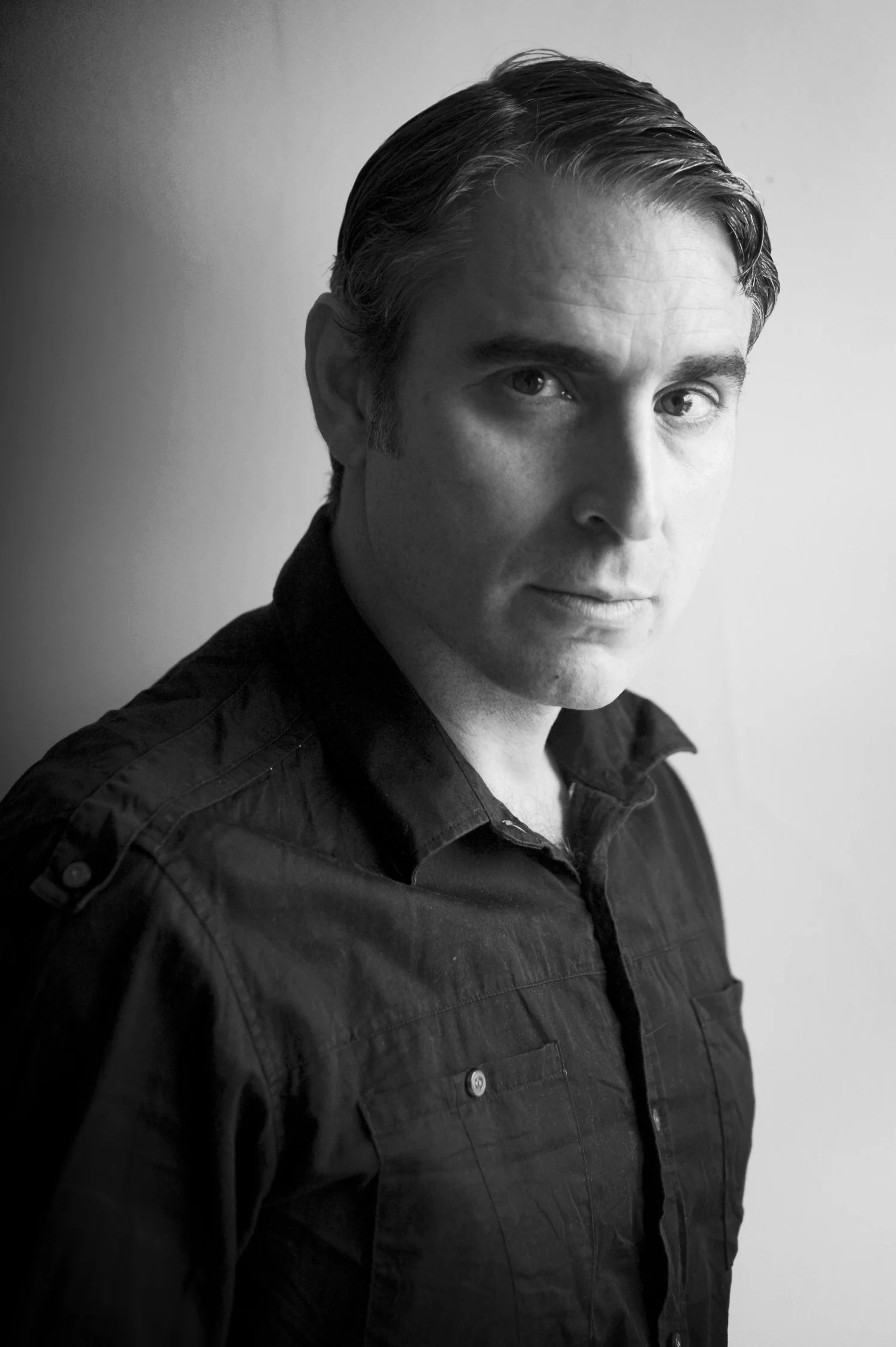
Sources and Methods #12: Louie Palu


Suzanne Schroder's blog

Suzanne Schroder on Twitter

Louie Palu 101:

Louie's website

Louie on Twitter

"Four Burning Questions for Louie Palu, photojournalist"
 
"Louie Palu Talks Global Conflict"
 
"Louie Palu: The Art of War"
 
"Dangerous exposure: Photojournalist Louie Palu on working in conflict zones"
 
"“Photographs Are There To Empower You”: Louie Palu Talks Mexico, The Drug War And Photography"

"Kandahar Journals"

"Portrait of an Artist: Louie Palu"

"Prison Photography: Louie Palu"

Show Notes:

2:45 - British photographer Don McCullin inspired me to become a photographer, saw his work and photographs, and immediately connected with it.

4:55 - Freelancing was exhilarating at the start, taking a photograph and then seeing it in paper’s the next day, but I knew quickly I wanted to work on long term projects.

5:32 - First major project were the mines in Northern Quebec and Ontario.

6:20 - I don’t usually get commissioned to do work, I do my own projects and then try to publish them. Eventually got hired at the Globe and Mail.

7:02 - Why do I cover war? I used to say because it was important, and of course it is. But really, there’s nothing personal in that answer, and it didn’t satisfy me. What I realized was that it all connected to my parents, to my roots. My dad's friend was thrown in a POW camp during WWII serving in the Italian Army, and he used to have to fight for food, literally competing with dogs. And that story really stuck with me, as I grew up with these stories, and it really has informed my work.

9:34 - The first conflict I covered was in Kandahar. I was a Canadian, and I heard we were about to start a combat mission there, and I wanted to document it, to start one of my long term projects. It wasn’t just a historical / patriotic thing, it was ‘what’s happening with this country, and our country.’

11:02 - My photography in Afghanistan wasn’t about Italian, or Canadian, or even Afghan, but it was about a human experience.

14:03 - Kandahar has astonishing history, so much to document.

17:01 - I wanted to avoid being a photographer who followed the shooting, or ‘bang bang’ as photographers call it. Did lots of researcher, and really tried to figure out how I could physically get where things were happening, and fill in the holes in the embedding system.

27:00 - Absurdity and war certainly go hand and hand.

31:49 - How to prepare for heading out in Kandahar? Basic respect and researching about everybody in that place as much as possible, and learning about the small things. Everyone wants to learn about the big things, but it’s really the small things.

33:10 - The Taliban don’t want to destroy Afghanistan, they want it to cohere. Afghanistan has always been a weak state but a strong nation.

35:03 - I think it’s important to see war from all sides. Only until you reach inside yourself and understand your own humanity is inhumanity revealed. Until you understand that, you’ll never get it.

52:02 - War is never straight forward, many people think that. It’s a lot of shades of grey. I think the important thing is training - and a lot of journalists went to Afghanistan but they were inexperienced, and this showed. Neutral and objective reporting wasn’t always there. It’s about looking at everybody as an individual.

54:25 - Palu’s Garmsir Marine Portraits. And his Concept Newspaper.

56:15 - I’ve covered the Mexican Drug War, and nobody wants to believe how violent that place is. 100,000 dead since 2006 - it’s like a little Syria with a functioning economy.

1:10:20 - One of my favorite photographs from Guantanamo doesn’t have to do with the detainees - I really started thinking about the environment of this place, and took a picture of a chair. It’s just a chair. But you don’t need to see any more to understand that something probably not that great happened there, and I thought it was really powerful.

1:17:13 - The big next project: Kandahar Journals, from 2009 and 2010 when I was in Kandahar. And I’ve been working on a story to go underneath all the stories and writing and photographs from my time there. It’s also about Kandahar being this forgotten front in the war as well. Working on a book as well. I’m also working on publishing parts of my archive and make it more accessible to the public.
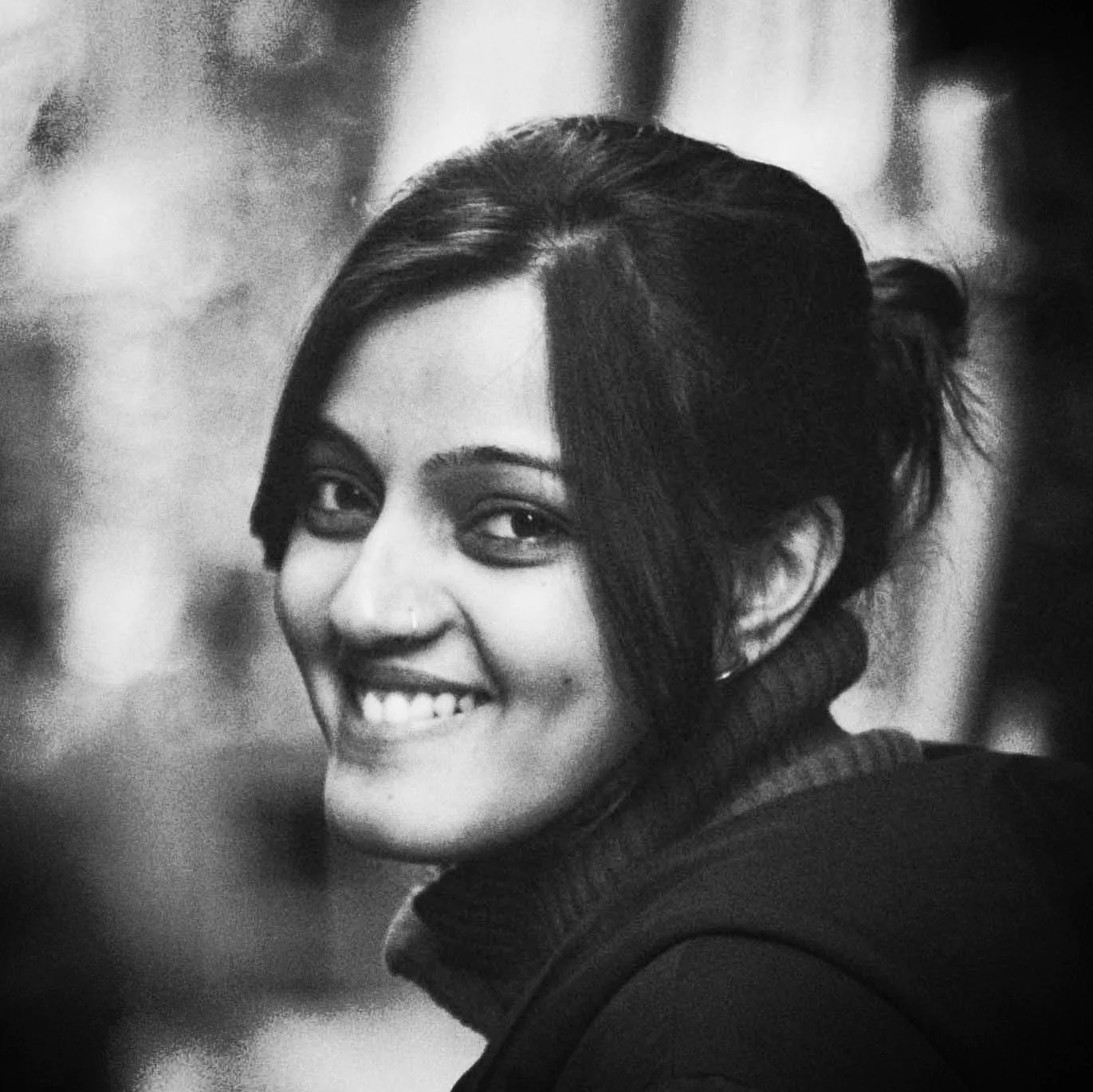
Sources and Methods #9: Rohini Mohan


Rohini Mohan 101:

Author site / blog

Rohini on Twitter / Instagram

The Seasons of Trouble (amazon.com / goodreads / google books)

Book excerpt - "The Abduction"

Interview with Guernica magazine - "Prachanai" (Trouble) in Sri Lanka, Past and Present

Show Notes:

Section read can be found here: http://caravanmagazine.in/reportage/defeated

9:04 - Covering the 2004 Indian Ocean Earthquake was an awakening point for my journalism, when I realized there was an entire other world out there and I knew nothing about it.

11:21 - At the time (2004), it was 1,000 or 2,000 words tops, not longform - that idea that people will not read a long piece that has changed a lot since then. People will read it if it is well written and engaging.

12:44 - I was interested in Sri Lanka first, not necessarily a book. I was in NY at Columbia getting a MA degree, and I graduated in 2009 after it was over… extended interest in the effects of the conflict and also as the numbers started coming out... made me start thinking I had material to tell a larger story.

17:46 - The first thing to do was to write down the history, because I found it the hardest thing to explain to someone who might not know anything. The history is various, it’s not one, as conflict history is, and that’s what I felt most insecure about, so that’s what I started writing about. And then I had to decide how many people to write about, and what the structure of the story would be.

19:40 - I also started looking for gaps [in information] and trying to fill those gaps.

24:40 - In Sri Lanka, there’s no doubt that knowing the language was helpful in building trust. People are very when they know you know the language - not that it’s always inviting or welcoming, it can be more responsibility if you know the language. When people knew I knew Tamil, some people wanted ideological agreement [with what they were saying]. Some of the people wanted me to take sides.

31:15 [On routines for interviews] - I do as much reading up on the person - even people I’m meeting for drinks - as possible. It’s become a routine. If I’m meeting people in power, I do develop a list of questions (as well as how many ways I can ask the same thing) because I expect them to evade the questions. And one habit is to be quiet after the interview - I don’t feel the need to fill the silence. The person will usually go back to something they said earlier or ask me a question, and that gives me a small glimpse into their personality or what’s on their mind. The other routine is to end the interview and then begin it again. I mean, it’s always at the door that people say the most interesting things.

36:20 - The way [government] intimidation works is that they put as many barriers in front of you and it’s not clear until later what the consequences will be. They are almost waiting for you to break the rules. As a foreign journalist, you can be easily controlled through visas, so that was always on top of my mind.

41:40 - [On morning routines] As a journalist, I mainly just reacted to deadlines. But this was a longer project mainly just working for myself. The first thing I would do is turn off the wifi and try to read something. If I did anything else, it would kill the calm with which I wake up. So I would read something when I woke up, even if it wasn’t related to the book, that would put me in a calm place. Once I started understanding that the day was gone, it was gone. It’s mind games with yourself. I also went away, to a place where there would be no network, no friends you want to meet, just get work done and do nothing else. If I wasn’t doing anything else, I would just read. I always try to read in the morning. Have your coffee and read something.

45:46 - One trick that helped me finish the first draft of the book: think of the book as a collection of scenes. That helped a lot. Just go from scene to scene (of course you have to choose the right ones). And you can always move the scenes around. It helps because when you wake up, you can know that you’re going to write two scenes, which can help quantify your work in a way.

48:18 - I used Scrivener to write the book. But I did most of my planning by hand. I used flowcharts, which changed around a lot. I tried to intertwine stories with history.

52:02 - Single most useful tool for creating structure: creating flowcharts [by hand]. In the end, it was flowcharts I had written on long plain sheets and laid them all around me until I felt I was drowning in them.

56:30 - Editors were very helpful in the writing process. I studied UK English, consume all kinds of English, speak Indian English, and so when I wrote, it was a mix of everything. Editors help me fix that.

1:03:30 - [On writing] In the end, you are just left with a feeling, but there are so many parts to it. There’s the part where you just lose yourself, where it’s instrumentation, and there are parts where suddenly you hear the lyrics, and you wonder what the song is about, where this comes from. I thought about that whenever I started to get confused or wonder where to go in my writing. Also, I have these very real people who had spent so much time with me, telling me real things, taking risks - if I had to say one thing about writing it, it would be a sense of responsibility to those people.

1:05:34 - Influences on her writing, that helped as she structured her own book:

Common Ground: A Turbulent Decade in the Lives of Three American Families by Anthony by J. Anthony Lukas

Half of a Yellow Sun by Chimamanda Ngozi Adichie

Behind the Beautiful Forevers: Life, Death, and Hope in a Mumbai Undercity by Katherine Boo

I also tried to read as many non-Western books as possible, books set in places outside of those areas.

Picks of the Week:

Rohini’s Books:

Traitor by Shobasakthi (written about here in Granta as ‘one of the best untranslated writers.’)

A Case of Exploding Mangoes by Muhammad Hanif

Rohini’s Film:  Katiyabaaz (a documentary)

Rohini’s Song:  Ith Naheen by Sanam Marvi


Sources and Methods #8: Azmat Khan


Photo credit: Sam Bailey


Azmat Khan 101:

Twitter / Facebook / Instagram / Google +

-- Tumblr/Blog

-- "The Brothers" (PBS Frontline in Cairo)

-- "The Bombing of al-Bara" (PBS Frontline):

Azmat @ Al-Jazeera America

Azmat @ PBS Frontline

Show Notes:

5:58 - Defining ‘success’ in the digital media age:

It depends on the institution. Some friends of mine have been given quotas to hit. I’ve been lucky not to have to do that. I value response and resonance as an indicator - people writing about it, talking about it online, questions, even critiques, things like that I really value in terms of success. The ideal success of course is when there’s a problem or injustice is to see that result in a conversation that hopefully elicits change.

7:50 - Al Bara Film

10:20 - Is Google News driving all of our news consumption?

Not necessarily - I’d say it’s more social. Facebook in particular, not as much Twitter, is one of the biggest sources of traffic, and it’s not a bad thing for a good thing to be shared a lot. And for people to study data to figure out ways to make it reach as many people as possible. In that way, it can be a very good thing. And there’s the opposite of that - when stories are told in a way just to elicit pageviews of clicks.

11:36 - A follow up point on success in journalism:

That it endures, and can be a reference point for something later… that can be a definitive portrait of something at a particular time.

16:00 - Staying up on social media:

I dip in an out of that depending on how busy I am with other things… But I spent a lot of time in the past curating lists of people to follow on Twitter. This can include newsletters. I use Digg’s website news.me and wakeup with a morning email. I use Reddit Edit.

At the same time, I think there are lots of non-traditional ways I gather information from areas that are less talked about.

Facebook Groups. If there’s an issue that sparks my interest or I want to learn more about or report on, one of the first things I’ll do is see if anyone has coalesced around that issue in a Facebook Group. It’s more useful than Message Boards, so you can message them directly, and it’s super easy to get in touch immediately and quickly. And people get intimate on a place like Facebook. That’s one of the most under-reported tools to use when trying to figure something out. It’s not representative of an issue, but it is individuals, and you can learn so much. It’s an incredible starting place that people don’t think about when they want story ideas.

20:58 - for the kinds of stories I’m doing now, I rely more on individuals than people talking about public issues on Twitter.

24:00 - Right now, one of the most fascinating things you can see online are people who’ve supposedly run off to join ISIS. They have blogs, and social media accounts. They are so interesting. But verification is very hard when it comes to these things. The best reporters have done a good job corroborating the facts… but I do wonder, what does this platform or accessibility do in terms of small errors or embellishment of the truth.

26:00 - Norwegian filmmaker and a fake short on Syria

28:02 - Fake blog taken for real news here. Proof here.

32:33 - I think books are increasingly underutilized. The people who turn to information that isn’t publicly accessible when they’re writing about whatever issue it is online.

33:48 - Brainpickings.org. It’s great because much of the material is not publicly accessible, the information is not at fingertips. There should be more of that, we may be losing a lot of that.

34:31 - I think the internet echo chamber is one of the dangers of how we receive our information. You would think the internet would afford more perspectives and differing ones than what you encounter in real life, walking around, but it actually in so many ways provides the opportunity for people to singularly identify - by hashtag, website, by following people - to actually narrow that down further.

38:10 - Standard research tools for Azmat:

  • Know how to write a Freedom of Information Request

  • Pacer.gov is an invaluable resource

  • Look at the courts

  • Ask for feedback

FOIA Letter Generator here

42:31 - Language classes are a game changer. (Matt and Alex feel quite strongly about this - you should take them. Need inspiration? Read Alex’s great post on why you should learn languages. And then pair with his second post on how you should learn that language.)

46:18 - Being fluent in a language puts you ahead in so many ways, it’s incredible. I can’t even explain it.

49:45 - If it’s Thursday, I’m listening to Serial. Any other day, I’m listening to NPR’s five minute newscast.

50:35 - I’m also obsessed with audiobooks, and prefer fiction.

54:00 - Azmat’s Instagram account.

56:30 - Azmat on Twitter.  

How did she grow her account to some 48,000 people?

It’s about providing a service, or context, or things that people find useful and interesting. Don’t necessarily push a narrative or an opinion - people really liked that.

1:00:01 - Azmat’s Tumblr.

1:04:00 - Azmat’s moving over to Buzzfeed.

Azmat’s Book: Never Let me Go by Kazuo Ishiguro

Matt’s Book: Zero to One by Peter Thiel

Matt’s Story: Why Our Memory Fails Us by Christopher Chabris and Daniel Simmons, creators of the famous Invisible Gorilla test (a Selective Attention test)

Azmat's Music pick:

Alex’s Book: Seasons of Trouble: Life Amid the Ruins of Sri Lanka's Civil War by Rohini Mohan

Azmat’s Film: It’s A Disaster

Azmat’s food she would eat if she were on death row: buttery lobster.

Matt’s Book: Being Mortal by Atul Gawande