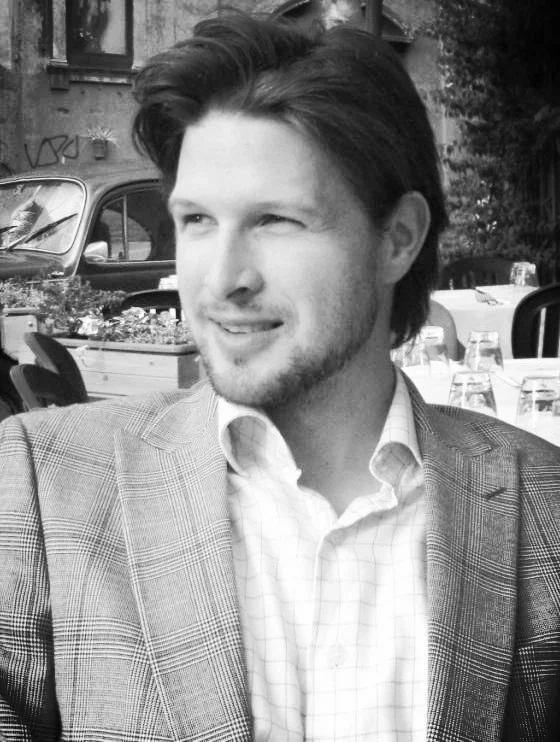
Sources and Methods #22: Jonathan Brown


Jonathan Brown 101:

Jonathan Brown on Wikipedia

Jonathan Brown's website / blog

Jonathan Brown on Facebook

Jonathan Brown's books (via Goodreads)

Misquoting Muhammad (via Amazon.com)


Show Notes:

3:40 - What I was trying to do was to write a book that would introduce a reader with no background - or take a reader with a good amount of background into more depth - into of the world of dealing with scripture in the Muslim tradition. How Muslims have understood they’re scriptural tradition and built on it to understand their religion in the face of centuries and centuries of change and particularly, recently more intensive change…. to get readers to see it as one of the world’s intellectual traditions that participates in the same dialogues and questions that other religious and philosophical traditions have dealt with.

5:13 - As a historian, I don’t think humans have much role in shaping history, I’m more of a materialist.

8:00 - (One of the big questions is) How do human beings know what God wants, without falling victim to their own whims and inclinations? So you have revelation, which is supposed to come in and free human being from their own biases and their own weaknesses and the weakness of their reason. But at the same time, revelation isn’t accessible except through reason and through interpretation, which is inevitably compromised by biases. So in a lot of ways, the Islamic tradition is about a lot of people and a lot of schools of thought trying to say - here’s the best way to minimize that bias.  

16:25 -  Most of these problems (spiritual authority in the Muslim world) are problems of modernity. It’s the problem of, how do people deal with an interpretive tradition, a scriptural tradition in a world where a lot of the tools of interpretation have been democratized or popularized, both through printing, through mass education, and then through electronic media and the internet. So prior to 1850, the people who spoke for Islam and told people what it meant was a class of scholars… it was fairly unified in how it saw the world and the message it preached. That starts being challenged in the late 19th century by the creation of – in the Muslim world – of European-style universities by the rulers of those Muslim states to try and match European development. And eventually you get the rise of the intellectual, who will be a practicing Muslim but will chip in with his two cents about religion from a different perspective, and that creates a new pluralism of authority. That’s the same world we’re in now.

19:52 - A lot of what I do in teaching and in my work is getting (them) not to look and act on the face of scripture too much but to always at least start looking for ways to be instructed about what’s behind the face of scripture.

20:41 - So I think Muslims should look at their own tradition and look at how they have indulged their own whims and their own biases over the centuries - and I did that in the book on the issue of women-led prayer - but I also think the same questions need to be asked with / to our interlocutors where questions assume certain cultural preferences.

33:25 - If there’s one thing I could have people understand: It would be to see Muslims as normal people and Islam itself as a religious tradition.

35:20 - If there’s a misunderstanding of religion or a version of Islam people don’t like, it must be corrected by Muslims, because they’re the only ones who will listen to each other.

Workflow:

37:26 - One thing I do, is I take very good notes. I usually take paper notes. So if I read a book, I usually make notes in the margins. When I finish the book, I go back and copy down all the notes in the margins of things I want to quote. So whatever it is I read, if I find it interesting, I’ll take notes on it and put it in my notebook. First thing is to take very good notes of everything. In this book, there were things I wrote down in college 20 years ago.

The second thing is - when I realize there’s a project I’m working on, or an idea for an article or a book, I’ll come up with a symbol. This book was an M with a circle around it. And I’ll go back and look through my notes. And 1) This will refresh things in my mind for teaching or other things and 2) it might be for my project. So when it gets time to actually get on to a project, I’ll go back through my notes and copy down all that information into a Word file with footnotes. So I’ll basically have a gigantic list of data, and I’ll start to organize that into chapters and themes, and that I’ll write into the outline document. So the writing comes from the data up to the final product.

In terms of processing information - obviously I read a lot, but talking to people is very important, and I find my teaching a very important tool to understanding what I read.

42:00 - When one tries to write a book that tries to get a lot of information across to an audience that is not a specialist, than you have to chose material that you can relate easily, and if it’s foreign to them, there has to be a really good reason why you’re going to tell them about it, and you have to be ready to give it the time it needs to explain that material. So you have to chose things that are relatable, but at the same time you don’t want to have everything relatable because then they think there’s nothing different about what I’m reading from my own life.


Brown’s picks:

Movies:

Lawrence of Arabia

The 13th Warrior

Books:

On The Muslim Question by Anne Norton

Music:

Reggae or anything by Dire Straits
Sources and Methods #21: Lion Kimbro

Lion Kimbro 101:

Lion’s personal website

Kimbro’s Book - How To Make a Complete Map of Every Thought You Think


Show Notes:

Simple information architecture overview

14:15 - (on hypertext fiction) I think people want a sense of closure, like they know that they read the whole thing.

Overview of hypertext fiction

Amazon’s X-Ray feature for Kindle, a reference tool which functions as a concordance

17:34 - I have difficulty telling friends I’ve read books - what I’ve done is skimmed through to parts that were interesting to me and read them in detail, and that to me is sufficient to me to say I’ve read a book, though friends tell me that’s not enough, and yeah

18:59 - (my book) zooms in on creative thought. It’s focused on ideas. You can monitor your thinking in such - my thinking of thinking has expanded since then, but it focuses on creative thought and originality and ideas.

22:30 - when you look at something, we all think we just stare at things. But when scientists watch how we look at things, our eyes are moving all over the place, framing it. We do the same thing socially.

29:50 - There’s a big school of thought that says you need to write everything down and memorise it, but I’m a huge fan of forgetting the rules. Because when it comes, we can decide to do what’s best from here.

39:03 - A trick for reading and accessing information later: as you’re reading something, and you want to have it, or share it with a friend, just flip to the front of the book and write your friend’s name and the page number, or the idea and the page number, and you have an instant index. 48:54 - My biggest recommendation for people: use your computer to index things. It will save you an enormous amount of time.

51:55 - For collaborative note taking / sharing: Honestly, just text files and dropbox. It’s simple and you’ll get a little notification whenever it’s changed.

David Allen’s Getting Things Done

Kimbro’s preferred task management system: JIRAAnother recommendation: KanbanFlow


Kimbro’s Picks:


Book: Dying to Learn

Movie: Puella Magi Madoka Magica

Song: Bohemian Rhapsody

Sources and Methods #19: Naheed Mustafa

The Struggle Over Jihad by Naheed Mustafa

Naheed on Twitter (her account)

Naheed on Tumblr

5:54 - It’s easier to stay with a story when you have a character that you can associate yourself with. But I feel like that’s also become a bit of a problem. When, for example, you do what I just did - you refer to real people as characters, it in many ways diminishes the importance of the story because you end up in a place where you really work on the craft of storytelling rather than highlighting the actual issue or the problem.

8:40 - We’ve come to have this almost sort of fetish around technology, and using the technology to drive the story-telling rather than the other way around.

10:07 - It used to be that we (radio journalists) were competing with Youtube. Now we’re competing with Vine!

12:53 - When I start piecing stories together, I storyboard everything. Scene by scene, a flowchart almost. And then I write each of these blocks separately, and then piece it all together.

16:45 - Unless you’re Nelson Mandela, nobody cares about your opinion (inside of your own work).

27:01 - One of the problems that’s happened, and it’s been a shift for a variety of reasons...There’s been this shift of magazines and places that are looking for long-form writing looking to writers, so fiction writers, to write about politics. So you’ll get somebody who has written novels in Pakistan to write about the current political crisis in Pakistan. What ends up happening is you end up with these beautiful pieces of literature which may or may not be adding anything to the conversation about what’s happening politically, but what it does is it kind of games the system for journalists, because then we’re like, we’re being asked to submit work that can compete with that on a literary level but, well, we’re not that. That’s not what we do. It’s become quite difficult.

29:45 - (on her role as a journalist) What I’m trying to do is illuminate. I don’t see my role as trying to convince anyone of anything... People should have informed opinions.

32:06 - I think objectivity is a myth. We curate and distill and editorialize (even) through the process of creating… the problem comes when we pretend we’re objective.

44:30 - The second you end up representing something specific in a newsroom, you end up running that desk.

Naheed’s crowdfunding effort to fund her work - page here

48:02 - It’s become increasingly difficult in journalism to really make a decent living doing this work. And I’ve always worked freelance, so I’ve always had to grapple with this question. So what you’ll see now is that a lot of journalism schools will have programs for journalists as entrepreneurs, and try to get them some business skills to help. Most of the freelance journalists I know who really make a go of it spend half or three-quarters of their time doing corporate work. And most of the people I know find it a little soul-sucking. Corporate work, or getting a teaching job, this gives you the income to keep going. Again, it’s the work that you want to do and the work that you have to do.

56:47 - I use Twitter in a variety of ways. One of things I was surprised to learn is that people were actually reading my tweets... Another lesson is that people don’t read more than one tweet at a time. I use it as a source of news, what are people sharing. I also use it as a way to highlight the work of others, which I think is really important.

1:06:45 - I really am a deadline driven person. In terms of workflow, it really does shift according to project. I don’t have a specific way of working. My work really depends on the medium I’m working in - print vs. radio vs. research. I wish I had more of a uniform system, that I could really plug myself into.

Naheed’s Books:

Unless

Cities of Salt

Muhammad The Last Prophet


Matt’s Pick:

The Practicing Mind


Naheed’s Films:

Kill Bill - Volume I

Ace Ventura: Pet Detective


Alex’s Pick:

Cortex Podcast


Naheed’s Music:

Soundtrack to Pakiza