Alex’s PhD Tool Recommendations
JK Weston’s email for readers of his book, loves to hear from you: jkwestonmt@gmail.com
Show Notes:
7:00 - Joined the foreign service after failing out of my PhD program
10:48 - How do you do it [implement US foreign policy] on the ground? You call a lot of audibles. It’s all about relationships.
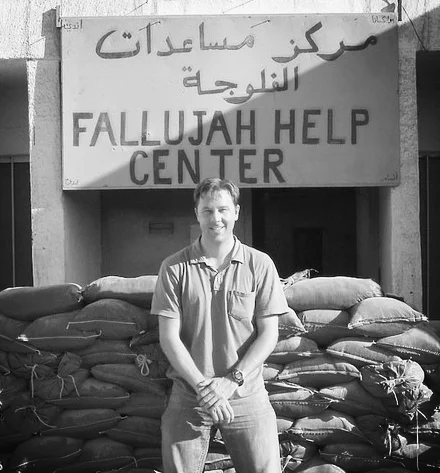
17:16 - The farther you are from a place like Fallujah or the farther you are from Anbar, Baghdad, Basra, you’re going to be dominated by domestic considerations matter more than what’s going on in the ground. I say this in the book - American elections matter more than any Iraqi or Afghan election, and I believe that.
20:15 - I was always trying to say that we’re not here to occupy your country, that we’re not here to suck out all your oil. The Marines are here to fight, and they’ll fight hard. And I’m here to say there’s a better way forward, where the troop levels go down. And I had another message for Washington - that even a guy here full time, I only knew 1%. Year by year I knew 1%.
21:40 - It behooves us as a country, even as a superpower, how little we can learn in a seven month tour, or a year tour, or even a three year tour.
24:10 My book is an exercise in resurrection in words, I’m trying to bring back in words, real characters, who deserve at least a few pages in a 600 book. And it’s got applications for today. I didn’t want to write a book with five policy lessons from Fallujah. What I wanted to do was write a book so that if you’re a SEAL in Coronado or your General Dunford or whether you’re just an average concerned citizen, you’ll understand that if you take an Iraqi female, there are going to be repercussions. And in the two longest wars in our history, have we learned those lessons and repercussions?
27:15 - I did not enter Fallujah looking at the world there in black and white at all. The two colors were grey and red. Way too much red, and grey everywhere. Some of my military colleagues, and I don’t fault them, had a harder time with that. If you were X then and you want to be Y now, that can’t work.
28:40 - When you listen to the people you’re there to interact with, they can tell you what you want to hear. It’s not as if they don’t want to come to some kind of arrangement with you. And I saw that in guys in the third or fourth tours who got that better…. I found that some of our best allies were folks who had been fighting us a year or two before, because they saw how bad things could get.
30:13 - War is about pragmatism on the ground. You can’t get on your high horse and say well, that guy was a bad guy three years ago. You can make a point, but you’ll never end a war if you don’t reach out and find more stability with more people.
31:39 - Warfare is about people. It’s about the cost to people in a war. People don’t win in a war. Never. Countries may win in a war, but never people. The people in Fallujah are still losing.
36:50 - In these wars we confused troop levels with commitment.
39:00 - I think we escalated a war, unnecessarily. We escalated in terms of troop levels - it’s like a big inverted V. We went up quickly and then the temptation was to drop quickly. And what I would’ve liked to have seen, which I think would have allowed for more consistent people to people interaction, is to go low to go long. I’ve been advocating that for over a decade.
42:43 - We should be wary of where our limits. One of the best lessons to come from Afghanistan and Iraq is we have limits. The American superpower - which we didn’t see in 2003. I remember when we were at the height of our national power, people forget it was before the mortgage meltdown, before everything we went through, our troops on the fourth, fifth, sixth tour, we were all muscle at the time. Twitch muscle. And what we now see is we have limits. I think this [understanding] will eventually make us a stronger power, a more responsible power. I also think that focusing on the homeland alone is also a recipe for disaster.
52:42 - The problem (on sending people with language skills to countries they are working on) was urgency, and I hope that’s a lesson that’s learned. When you’re sending 150,000 soldiers to Iraq, this isn’t a priority. I don’t believe that the best representatives of the United States always are the experts in the region because at some level there’s a distance that’s helpful as well. I went native with the Sunnis in the West (of Iraq) and the Marine Corps, and I don’t think that undermined what we were doing, but you need a balance.
54:55 - The best diplomats are the ones who speak the language, know the history, and know the arc of that part of the world, for sure. And Amb. Crocker, Ford, and I could name a number of them, they’re out there.
55:55 - It’s a resurrection book. It’s also an accountability book. I believe that some of the literature out there is missing the lowercase ‘p’ for political frame. that wars get started and decisions are made and we shouldn’t just pretend it’s about me and my platoon. That’s an important story. But there’s also the story about the United States of America going to war. And because of my job I felt like I had curtains that I could pull back, in as an objective way I could, and in the best writing I could. So it’s not a counterinsurgency 501 lessons learned book, it’s - these are the stories, these are the people.
56:54 - The mechanics are two shoeboxes full of audiotapes. I used to speak into tape recorders in Iraq. I didn’t even rely on these as much as I could because I almost had too much information. So one day I may do another kind of book. The audio. You know, one day Sheikh Hamza is killed, I’m venting into an audio recorder and you can hear the call to prayer in the background in the middle of Fallujah and that’s all incredible audio. And it’s also in terms of writing where the details came from.
And I also had a pile of those military green notebooks.
59:15 - The best ‘Mirror Test’ from these wars will come from them [the Iraqis and Afghans]. And I can’t wait until there’s an archive of - I hope one day - the Fallujans writing about the Americans in their city. And I might be able to help that. I hope that someday we’re reading the raw, unfiltered voices of the war. Because I’m still a filter, I still have my biases, I still made my decision on what to focus on. That’s why I ended the book with the soldier’s journal, because I wanted just his voice to be raw and pure, how it is when you’re in the middle of Sadr City. And why I end with the friends and family for the Marines who were killed in that helicopter crash.
1:00:47 - I know many veteran writers who are very disciplined people who write 1,000 words a day. I’m not one of those people. If I’m motivated and the coffee is flowing, I may write a bit. I spend most of my time thinking about what I’m going to write. This book was actually in formation in my mind between National Parks out West because I needed to start thinking about how to dig into my seven year archive. I had too much information. I had too many stories.
1:02:40 - I still think the best books of these wars are yet to come.
For a non-fiction writer, I sought a fiction editor. I was searching for my weaknesses.
On how to launch a career like his:
1:06:07 - I would say the State Department is doing a much better job of looking like the rest of America. It’s not all Pale Male from Yale. And that’s good because the world needs to see us in all of our diversity and our strengths and weaknesses.
1:06:41 - I also would say that there’s no set game plan to pass the exam [Foreign Service Exam]. I don’t think you can just read every New York Times paper that comes out and start with the culture section and finish with A1. Read widely, go overseas, I’m always an advocate when you’re out of college - go see the world. You’re only going to be able to understand America by living the rest of the world. I believe that fundamentally. You’ll only be able to represent the United States well if - not just over a summer, or a two week tour to Venezuela or Italy or Japan - but to really cut yourself off from your country for awhile. And a lesson in so many ways. And then by the time you’ve had that experience - whether it’s a language program, Peace Corps, military - you will become the better diplomat, because you will know what our country looks and sounds like, oceans away. And it’s that empathy thing, you now know how they see us because you’re among. The good and the bad.
The best ambassadors we have are not our official ambassadors in our embassies. They are the ambassadors in the generation that say, Ok, the Americans still represent this, even though that.
[We find our greatest safety, we find the greatest stability when] We’re that leader that people want to follow not because they’re fearful of us, not because of our military.
So yes, go overseas, go to a hard place. Go to places that maybe are going to challenge you to your core. And then if you want to join the State Department or USAID and they ask you the question ‘so why are you qualified and or what do you want to do’ - that’s your best opportunity. Is to say here’s what I lived, here’s what I experienced.
Kael’s Picks:
Television
1973/74 British Television Series ‘World at War.’ Episode 18. Narrated by Lawrence Olivier. This episode, titled ‘Occupation Holland’ has moved me more than anything I’ve ever seen in my whole life. They focus on the Dutch experience.
Music
Love Vigilantes New Order. For service members, it will be incredibly moving.
Book
War Comes to Garmser by Carter Malkasian